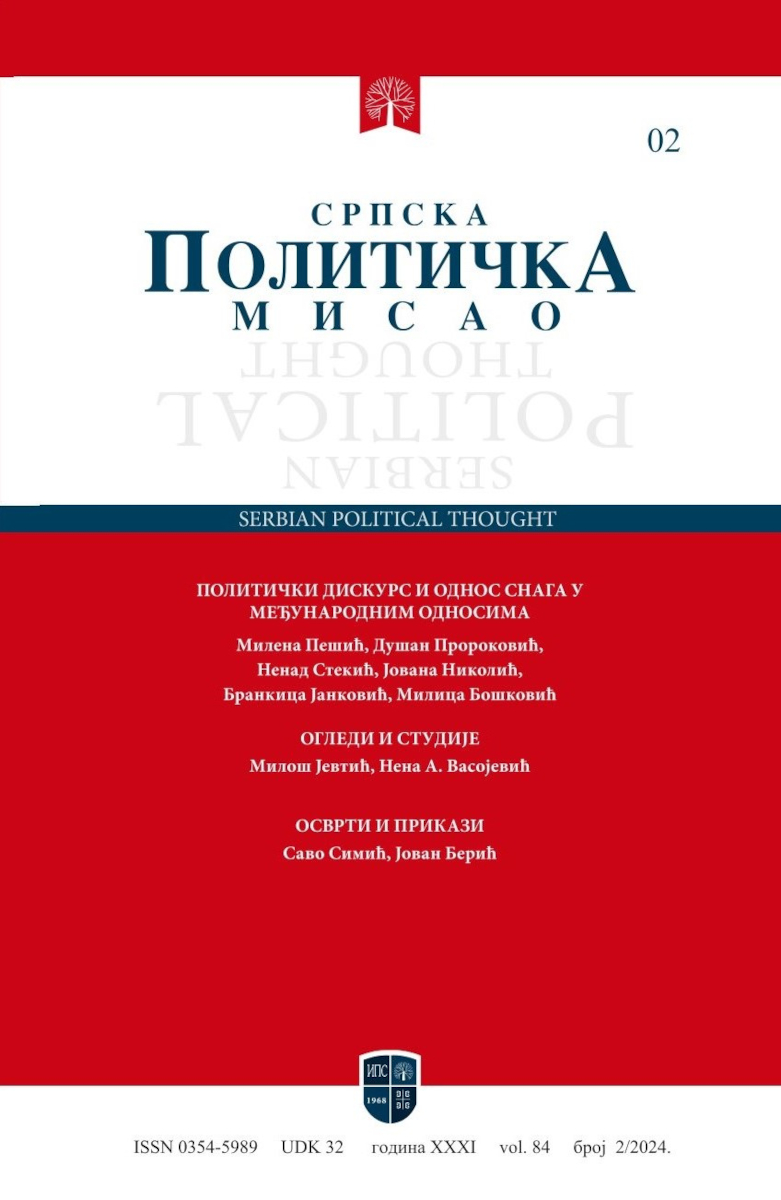
КОЛЕКТИВНО СТРАДАЛНИШТВО: ФЕНОМЕН И ЊЕГОВЕ ПОСЛЕДИЦЕ
Сажетак
Тумачења прошлости неизоставно укључују питање губитака које је одређена група доживела. Разумевање историјских патњи није проблем резервисан за одређену науку, те је могуће приступити му из различитих перспектива. У овом раду, пажња је усмерена на однос између страдања (као чињенице) и страдалништва, као начина размишљања. Прецизније, рад је концентрисан на анализу доживљаја страдања ког заступају чланови групе, његове последице на међугрупном нивоу (односи између држава и/или етничких група, односи између различитих група унутар једног друштва итд.), као и анализу контекста на које су се емпиријске студије концентрисале. Такође, рад ће указати на сложену природу страдалништва, као и на различите социо-психичке факторе у вези са овим уверењем. На крају, импликације страдалништва по актуелне међугрупне односе и сугестије за даља истраживања ће бити размотрене.
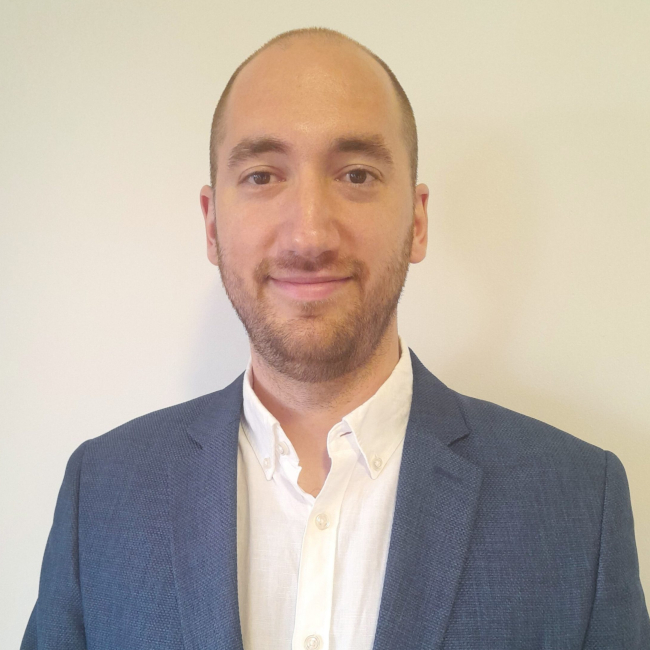 Др Милош Јевтић
Референце
- Al–Ghazzi, Omar. 2021. „We will be great again: Historical victimhood in populist discourse“. European Journal of Cultural Studies, 24(1), 45–59. DOI:10.1177/1367549420985851
- Andrighetto, Luca, et al. 2012. „Reducing competitive victimhood in Kosovo: The role of extended contact and common ingroup identity“. Political Psychology, 33(4), 513–529. doi:10.1111/j.1467–9221.2012.00887.x
- Ariely, Gal 2019. „Collective memory and attitudes toward asylum seekers: evidence from Israel“. Journal of Ethnic and Migration Studies, 47(5), 1084–1102. doi:10.1080/1369183x.2019.1572499
- Bar–Tal, Daniel. 1998. „Societal beliefs in times of intractable conflict: The Israeli case“. International Journal of Conflict Management, 9(1), 22–50. doi:10.1108/eb022803
- Bar–Tal, Daniel. 2000. „From intractable conflict through conflict resolution to reconciliation: Psychological analysis“. Political Psychology, 21(2), 351–365. doi:10.1111/0162–895X.00192
- Bar–Tal, Daniel. 2003. „Collective Memory of Physical Violence: its Contribution to the Culture of Violence“. In Cairns, E., Roe, M.D. (Eds.) The Role of Memory in Ethnic Conflict (pp. 77–93). Palgrave Macmillan. doi:10.1057/9781403919823_5
- Bar–Tal, Daniel. 2007. „Sociopsychological foundations of intractable conflicts“. American Behavioral Scientist, 50(11), 1430–1453. doi:10.1177/0002764207302462
- Bar–Tal, Daniel, et al. 2009. „A sense of self–perceived collective victimhood in intractable conflicts“. International Review of the Red Cross, 91(874), 229–258. doi:10.1017/S1816383109990221
- Bar–Tal, Daniel, and Sabina Cehajic-Clancy. 2014. „From Collective Victimhood to Social Reconciliation: Outlining a Conceptual Framework“. In: D. Spini, G. Elcheroth & D. Corkalo Biruski (Eds.), War, Community, and Social Change (pp. 125–136). Springer. doi:10.1007/978–1–4614–7491–3_8
- Barton Hronešová, Jessie. 2022. „The uses of victimhood as a hegemonic meta–narrative in eastern Europe“. Journal of Contemporary European Studies, 1–17. doi:10.1080/14782804.2022.2110456
- Ben Hagai, Ella et al. 2013. „Shifting away from a monolithic narrative on conflict: Israelis, Palestinians, and Americans in conversation“. Peace and Conflict: Journal of Peace Psychology, 19(3), 295–310. doi:10.1037/a0033736
- Bilewicz, Michał, and Anna Stefaniak. 2013. „Can a victim be responsible? Anti–Semitic consequences of victimhood–based identity and competitive victimhood in Poland“. In B. Bokus (Ed.), Responsibility: An interdisciplinary perspective (pp. 69–77). Matrix
- Bouchat, Pierre, et al. 2017. „A century of victimhood: Antecedents and current impacts of perceived suffering in World War I across Europe“. European Journal of Social Psychology, 47(2), 195–208. doi:10.1002/ejsp.2232
- Canetti, Daphna, et al. 2018. „Collective Trauma From the Lab to the Real World: The Effects of the Holocaust on Contemporary Israeli Political Cognitions“. Political Psychology, 39(1), 3–21. doi:10.1111/pops.12384
- Carretero, Mario, et al. 2012. „Students’ historical narratives and concepts about the nation“. In M. Carretero, M. Asensio & M. Rodriguez–Moneo (Eds.), History education and the construction of national identities (pp. 153–170). Information Age Publishing
- Cohrs, J. Christopher, Andrew McNeill and Johanna Ray Vollhardt. 2015. „The two–sided role of inclusive victimhood for intergroup reconciliation: Evidence from Northern Ireland“. Peace and Conflict: Journal of Peace Psychology, 21(4), 634–647. doi:10.1037/pac0000141
- Craig, Maureen A., and Jennifer A. Richeson. 2016. „Stigma–Based Solidarity: Understanding the Psychological Foundations of Conflict and Coalition Among Members of Different Stigmatized Groups“. Current Directions in Psychological Science, 25(1), 21–27. doi:10.1177/0963721415611252
- Golec de Zavala, Agnieszka, and Aleksandra Cichocka. 2012. „Collective narcissism and anti–Semitism in Poland“. Group Processes and Intergroup Relations, 15(2), 213–229. doi:10.1177/1368430211420891
- Haslam, S. Alexander, et al. 1999. „Social identity salience and the emergence of stereotype consensus“. Personality and Social Psychology Bulletin, 25(7), 809–818. doi:10.1177/0146167299025007004
- Hirschberger, Gilad, et al. 2017. „The existential underpinnings of intergroup helping: When normative and defensive motivations collide“. Personality and Social Psychology Bulletin, 43(10), 1469–1484. doi:10.1177/0146167217718524
- Hirschberger, Gilad, and Tsachi Ein-Dor. 2020. „A temporal account of collective victimization as existential threat: Reconsidering adaptive and maladaptive responses“. In J. R. Vollhardt (Ed.), The Social Psychology of Collective Victimhood (pp. 100–119). Oxford University Press. doi:10.1093/oso/9780190875190.001.0005
- Hogg, Michael A. 2007. „Uncertainty–identity theory“. Advances in experimental social psychology, 39, 69–126. doi:10.1016/S0065–2601(06)39002–8
- Jevtić, Miloš. 2020. „Proglas o kolektivnim sećanjima: značaj i problemi za kulturu pamćenja“. U Z. Milošević i M. Knežević (Ur.), Govor mržnje i kultura pamćenja (str. 373–393). Institut za političke studije
- Jevtić, Miloš. 2021. „Uticaj međugrupnih emocija na pomirenje“. Sociologija, 63(1), 118–142. doi:10.2298/SOC2101118J
- Jevtić, Miloš. 2023. „Kolektivna sećanja: između istine i ubeđenja“. U A. Matijević i N. Spasojević (Ur.), Perspektive političkih nauka u savremenom društvu (str. 369–400). Institut za političke studije. doi:10.22182/ppnsd
- Kahalon, Rotem, et al. 2019. „Power matters: The role of power and morality needs in competitive victimhood among advantaged and disadvantaged groups“. British Journal of Social Psychology, 58(2), 452–472. doi:10.1111/bjso.12276
- Liu, James H., and Denis J. Hilton. 2005. „How the past weighs on the present: Social representations of history and their role in identity politics“. British Journal of Social Psychology, 44(4), 537–556. doi:10.1348/014466605X27162
- Liu, James H., et al. 2005. „Social Representations of Events and People in World History Across 12 Cultures“. Journal of Cross–Cultural Psychology, 36(2), 171–191. doi:10.1177/0022022104272900
- Mukherjee, Sahana, Glenn E. Adams, and Ludwin E. Molina. 2017. „A cultural psychological analysis of collective memory as mediated action: Constructions of Indian history“. Journal of Social and Political Psychology, 5(2), 558–587. doi:10.5964/jspp.v5i2.705
- Noor, Masi, Rupert James Brown, and Garry Prentice. 2008. „Precursors and mediators of intergroup reconciliation in Northern Ireland: A new model“. British Journal of Social Psychology, 47(3), 481–495. doi:10.1348/014466607X238751
- Noor, Masi, et al. 2010. „Intergroup identity perceptions and their implications for intergroup forgiveness: The Common Ingroup Identity Model and its efficacy in the field“. The Irish Journal of Psychology, 31(3–4), 151–170. doi:10.1080/03033910.2010.10446332
- Noor, Masi, et al. 2012. „When suffering begets suffering the psychology of competitive victimhood between adversarial groups in violent conflicts“. Personality and Social Psychology Review, 16(4), 351–374. doi:10.1177/1088868312440048
- Noor, Masi, et al. 2015. „Peace vision and its socio–emotional antecedents: The role of forgiveness, trust, and inclusive victim perceptions“. Group Processes & Intergroup Relations, 18(5), 644–654. doi:10.1177/1368430215586604
- Noor, Masi, et al. 2017. „The social psychology of collective victimhood“. European Journal of Social Psychology, 47(2), 121–134. doi:10.1002/ejsp.2300
- Obradović, Sandra, and Caroline Howarth. 2018. „The power of politics: How political leaders in Serbia discursively manage identity continuity and political change to shape the future of the nation“. European Journal of Social Psychology 48(1), 25–35. doi:10.1002/ejsp.2277
- Páez, Dario R., and James Hou-Fu Liu. 2010. „Collective Memory of Conflict“. In D. Bar–Tal (Ed.), Intergroup Conflicts and their Resolution: A social Psychological perspective (pp. 105–124). Psychology Press. doi:10.4324/9780203834091
- Ray, Devin G., Diane M. Mackie, and Eliot R. Smith. 2014. „Intergroup emotion: self–categorization, emotion, and the regulation of intergroup conflict“. In C. von Scheve & M. Salmela (Eds.), Collective emotions (pp. 235–250). Oxford University Press
- Robben, Antonius CGM, and Marcelo M. Suárez-Orozco. (Eds.). 2000. Cultures under siege: Collective violence and trauma. Cambridge University Press
- Rosler, Nimrod, and Nyla R. Branscombe. 2019. „Inclusivity of past collective trauma and its implications for current intractable conflict: The mediating role of moral lessons“. British Journal of Social Psychology, 59(1), 171–188. doi:10.1111/bjso.12336
- Rotella, Katie N., et al. 2013. „Blinding Trust: The Effect of Perceived Group Victimhood on Intergroup Trust“. Personality and Social Psychology Bulletin, 39(1), 115–127. doi:10.1177/0146167212466114
- Sava, Ionel Nicu. 2020. „From Political Nostalgia to Cultural Trauma? Hungary’s European Dilemma a Hundred Years After Trianon“. Transylvanian Review, 29(3), 42–53. doi:10.33993/tr.2020.3.03
- Schori‐Eyal, Noa, Yechiel Klar, and Yarden Ben‐Ami, Y. 2017. „Perpetual ingroup victimhood as a distorted lens: Effects on attribution and categorization“. European Journal of Social Psychology, 47(2), 180–194. doi:10.1002/ejsp.2250
- Schori–Eyal, Noa, et al. 2017. „The shadows of the past: Effects of historical group trauma on current intergroup conflicts“. Personality and Social Psychology Bulletin, 43(4), 538–554. doi:10.1177%2F0146167216689063
- Shnabel, Nurit, Samer Halabi, and Masi Noor. 2013. „Overcoming competitive victimhood and facilitating forgiveness through re–categorization into a common victim or perpetrator identity“. Journal of Experimental Social Psychology, 49(5), 867–877. doi:10.1016/j.jesp.2013.04.007
- Skrodzka, Magdalena, et al. 2022. „“Remember that we suffered!” The effects of historical trauma on anti‐Semitic prejudice“. Journal of Applied Social Psychology, 52(5), 341–350. doi:10.1111/jasp.12862
- Smith, Eliot R. 1993. „Social identity and social emotions: Toward new conceptualizations of prejudice“. In D. Mackie & D. Hamilton (Eds.), Affect, cognition and stereotyping. Interactive Processes in Group Perception (pp. 297–315). Academic Press
- Staub, Ervin, and Daniel Bar-Tal, D. 2003. „Genocide, mass killing, and intractable conflict: Roots, evolution, prevention and reconciliation“. In D.O. Sears, L. Huddy & R. Jervis (Eds.), Oxford Handbook of Political Psychology (pp. 710–751). Oxford University Press
- Turner, John C., et al. 1987. Rediscovering the social group: A social categorization theory. Oxford: Basil Blackwell. doi:10.2307/2073157
- Vermeersch, Peter. 2019. „Victimhood as victory: The role of memory politics in the process of de–Europeanisation in East–Central Europe“. Global Discourse, 9(1), 113–130. doi:10.1332/204378918X15453934506003
- Volkan, Vamik D. 1997. Bloodlines: From ethnic pride to ethnic terrorism. Westview Press
- Volkan, Vamik D. 2001. „Transgenerational transmissions and chosen traumas: An aspect of large–group identity“. Group Analysis, 34(1), 79–97. doi:10.
- Vollhardt, Johanna R. 2009. „The role of victim beliefs in the Israeli–Palestinian conflict: Risk or potential for peace?“. Peace and Conflict: Journal of Peace Psychology, 15(2), 135–159. doi:10.1080/10781910802544373
- Vollhardt, Johanna R., and Ervin Staub. 2011. „Inclusive altruism born of suffering: The relationship between adversity and prosocial attitudes and behavior toward disadvantaged outgroups“. American Journal of Orthopsychiatry, 81(3), 307–315. doi:10.1111/j.1939–0025.2011.01099.x
- Vollhardt, Johanna Ray, and Rezarta Bilali. 2015. „The role of inclusive and exclusive victim consciousness in predicting intergroup attitudes: Findings from Rwanda, Burundi, and DRC“. Political Psychology, 36(5), 489–506. doi:10.1111/pops.12174
- Vollhardt, Johanna Ray, Rashmi Nair and Linda R. Tropp. 2016. „Inclusive victim consciousness predicts minority group members’ support for refugees and immigrants“. Journal of Applied Social Psychology, 46(6), 354–368. doi:10.1111/jasp.12368
- Vollhardt, Johanna Ray, et al. 2021. „Beyond comparisons: The complexity and context‐dependency of collective victim beliefs“. European Journal of Social Psychology, 51(7), 1138–1157. doi:10.1002/ejsp.2802
- Warner, Ruth H., Michael JA Wohl and Nyla R. Branscombe. 2014. „When do victim group members feel a moral obligation to help suffering others?“. European Journal of Social Psychology, 44(3), 231–241. doi:10.1002/ejsp.2010
- Warner, Ruth H. and Nyla R. Branscombe. 2012. „Observer perceptions of moral obligations in groups with a history of victimization“. Personality and Social Psychology Bulletin, 38(7), 882–894. doi:10.1177/0146167212439212
- Wohl, Michael JA, and Nyla R. Branscombe. 2008. „Remembering historical victimization: Collective guilt for current ingroup transgressions“. Journal of Personality and Social Psychology, 94(6), 988–1006. doi:10.1037/0022–3514.94.6.988
- Wohl, Michael JA, and Jay J. Van Bavel. 2011. „Is identifying with a historically victimized group good or bad for your health? Transgenerational post‐traumatic stress and collective victimization“. European Journal of Social Psychology, 41(7), 818–824. doi:10.1002/ejsp.844