The project of enlargement and accession to the EU, in its very essence, boils down to the structural destruction of nation-states as independent political centers and the integral depoliticization of the economy. The Maastricht Treaty provided the basis for the implementation of privatization, the reduction of public spending, the rapid increase in unemployment and the ever-increasing reduction of social rights. Transnational financial institutions and multinational companies dictate, within legal frameworks, rules, imposing them on states that are increasingly less sovereign and more territorial. A form of debt slavery is being established through the European Balance of Powers Pact, and the monetary sovereignty of the nation-state is disappearing.
Europe is increasingly falling into an identity crisis because its inviolable privilege is no longer the praised and proclaimed model of parliamentary democracy and market economy, nor its primacy in education, science and the arts. The greatest ethical paradox of today's civilization is also connected with the identity crisis: the conditions for human happiness are greater today than before, but people are less and less truly happy and free, and more and more afraid. The process of Europeanization has shown that the Enlightenment-technocratic faith in the possibility of limitless rectilinear progress has been seriously undermined, because we are faced with limits to growth in the economy and industry, but also in other 18 fields of social development that have jeopardized technocratic plans and projects. It is precisely because of the process of Europeanization, which was most often called the neutral name of modernization, and in today's final phase the impersonal name of globalization is increasingly used, that it has become clear that the European world has today reached the ultimate distance from its Greek source, because this world has nothing specifically European, nor any standards of morality and common values.
Will the peoples of this area, where a policy of complete exploitation of all forms of social life is being implemented with a parallel process of deliberate “stupidization”, survive? The peoples of the Balkans will become collateral victims of this absolute freedom of the market and the absolute freedom of employers to impose their conditions on workers.
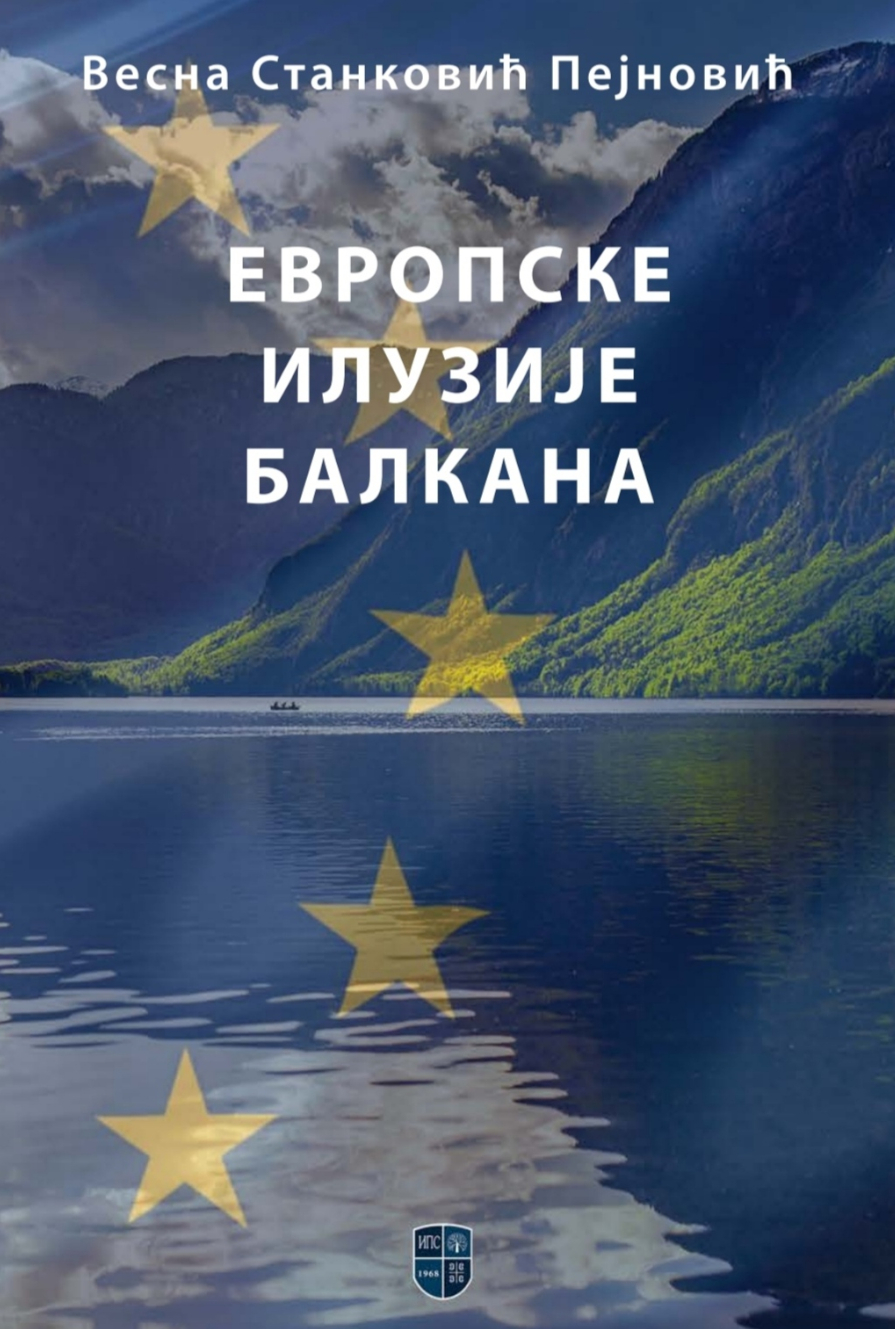
In her European Interests of the Balkans, the author, in a very precise and professional manner, with clear scientific argumentation, referring to a large number of scientific findings in the world, opens up many questions, such as identity, colonization, modernization and globalization, hidden, more or less successfully from the Balkan reality and placed in the field of European illusions. Namely, all the Balkan states that emerged on the ruins of the Balkan Wall, have declared the Euro-Atlantic integration process as their strategic goal. For some of them, this ambition is already a reality, while others are still on that path. However, the author emphasizes, these are largely illusions.
The author systematically and very clearly and precisely points out the basic problems and different approaches to this topic, and critically analyzes the EU's attitude towards the Balkans, but also the attitude of the Balkan states themselves, which are still outside the European integration reality, towards the EU accession process. The freshness of thought, the firmness and clarity of the positions expressed, the solid knowledge of the EU's subject matter and the mature civilizational message about the European path, are great guarantees that the book will arouse the interest of the reading and scientific public.