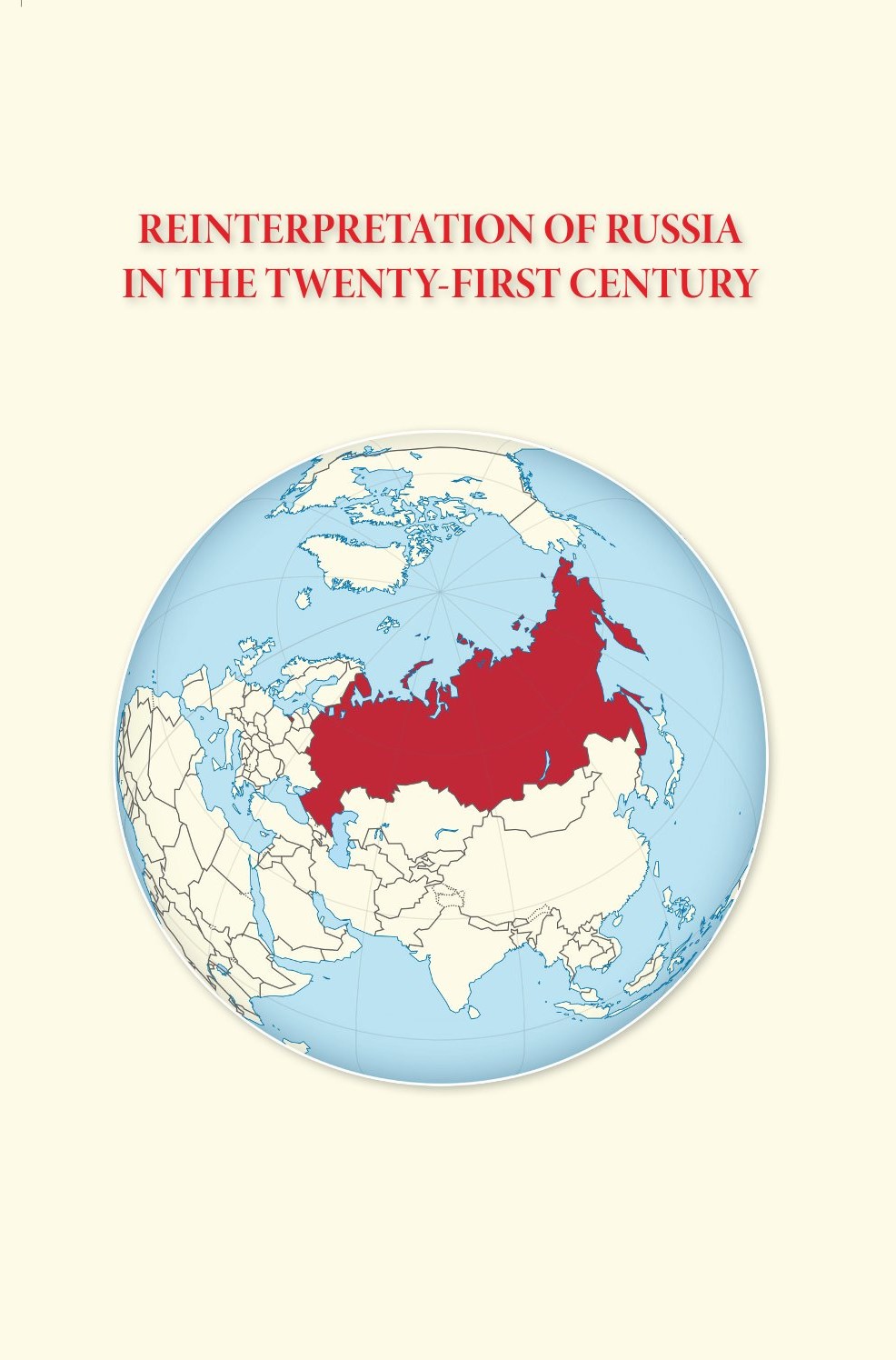
REINTERPRETATION OF RUSSIA IN THE TWENTY-FIRST CENTURY
Koljević Griffith, Bogdana (ed.). 2023. Reinterpretation of Russia in the twenty-first
century. Belgrade: Institute for Political Studies. ISBN 978-86-7419-392-1
As the topic is not exhausted, a conference entitled “Seconds to Midnight: Capitalism, Connectivity and the Persistent Global Crisis” was organized in the meantime, held at the Department of Political and Social Sciences of the University of Catania, Italy, on September 8, 2023.
The proceedings before you consist of eleven papers: Slobodan Vladušić, RUSSIA AND MEGALOPOLIS; Pierre-Emmanuel Thomann, THE NEW WORLD SPATIAL AND GEOPOLITICAL ORDER INITIALIZED BY RUSSIA AFTER THE UKRAINIAN CONFLICT: WHAT ARE THE PERSPECTIVES FOR EUROPE?; Gabriel Gallis, Gilles-Emmanuel Jacques, PARTNERSHIP OR CONFRONTATION BETWEEN EUROPE AND RUSSIA; Alexis Trud, FRANCE AND RUSSIA: BETWEEN DEEP DISAGREEMENT AND COMMON INTEREST; Alexander A. Lvov, RUSSIA AND THE WEST AS CONCEPTUAL OPPOSITION AND IDEOLOGICAL RELEVANCE; Boris Bratina, Sibin Bratina, WHO NEEDS A RE-THINKING OF RUSSIA; Eva Bujvid-Kurek, THE THIRD WAVE OF DEMOCRATISATION OF THE POLITICAL SYSTEM IN RUSSIA; Marius Vaccarello, RE-THINKING OF THE RUSSIAN ECONOMY – A NEW DEVELOPMENT; A NEW FRAMEWORK; NEW CHALLENGES; Aleksandar Mus, MODERN MASS HIGHER EDUCATION AND THE ACADEMIC ROLE OF THE EXPERT AS A POSSIBLE CAUSE OF THE CRISIS; Douglas Mark Ponton, Dilyara Daveltsina, INDIVIDUALISM AND COLLECTIVISM: INTERCULTURAL AND PERSPECTIVES OF BRITISH AND RUSSIAN COVID POETRY. At the very end, there is also the work of the editor of the Proceedings, Prof. Dr. Bogdana Koljević Griffith, entitled: “After Neoliberalism: Russia and European Values in the 21st Century”.
This article analyzes the political and social consequences of the “neoliberal turn”, which is recognized not only in the politics of American exceptionalism but also in the EU project. It is argued that Europe began to destroy its own value system with the beginning of modern European wars, i.e. wars against the Serbs, and then the emphasis is placed on the problem of reinterpreting Russia, as a matter of changing eras and the "end of the American century" and as a potential for a new political-philosophical discourse of equality and true democracy.